Unusual Options Activity Is Not a Signal Until the Tape Checks Out
UOA alerts are noise without filters, print-level tape, and open-interest context. TradingFlow’s Option Trades and Rank surfaces make that audit possible.
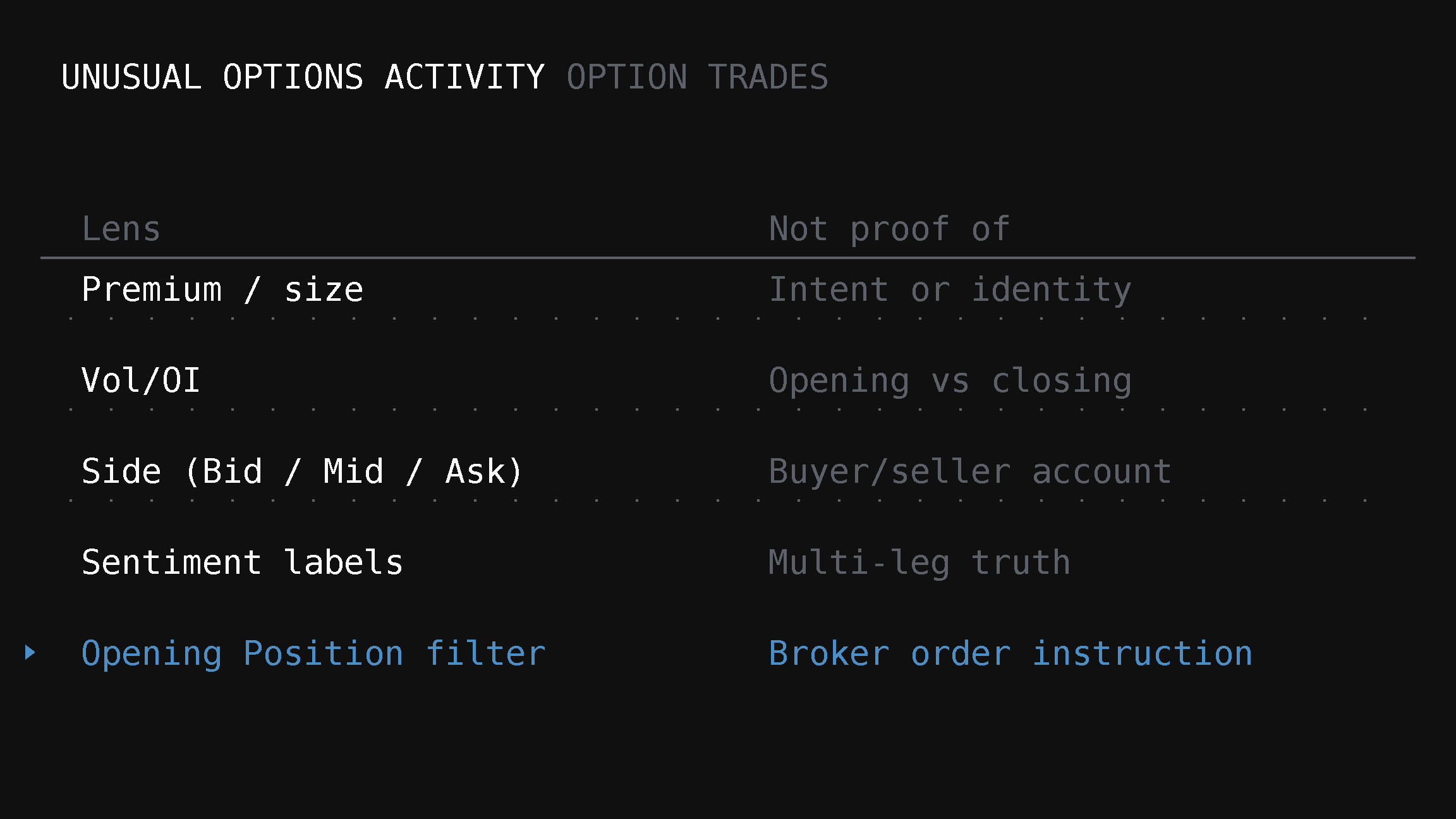
Unusual options activity (UOA) is one of the hottest phrases in US options social media—and one of the most abused. A large print, a high Vol/OI ratio, or a vendor “unusual” badge is not automatically smart money, not automatically opening, and not automatically a directional bet.
TradingFlow treats UOA as a screening hypothesis that must survive an audit:
- Filters that define “unusual”
- Print-level option flow tape
- Open interest / OI-change context
- Optional structure (GEX / walls) when the claim is about levels
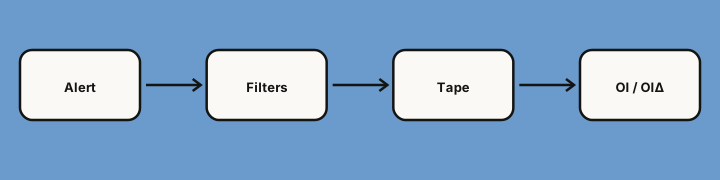
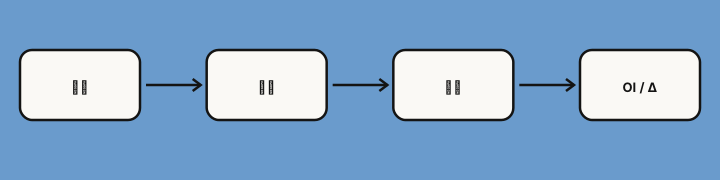
Alert → filters → tape → OI context. Skip a step and you are screenshot trading.
What “unusual” can mean in TradingFlow
On Option Trades and Historical, traders commonly screen with:
| Lens | Useful for | Not proof of |
|---|---|---|
| Premium / size | Large economic footprint | Intent or identity |
| Vol/OI | Volume large vs open interest | Opening vs closing |
| Side (Bid / Mid / Ask) | Quote location of the print | Buyer/seller account |
| Sentiment labels | Heuristic bullish/bearish tags | Multi-leg truth |
| Opening Position filter | Flow/OI classification heuristic | Broker order instruction |
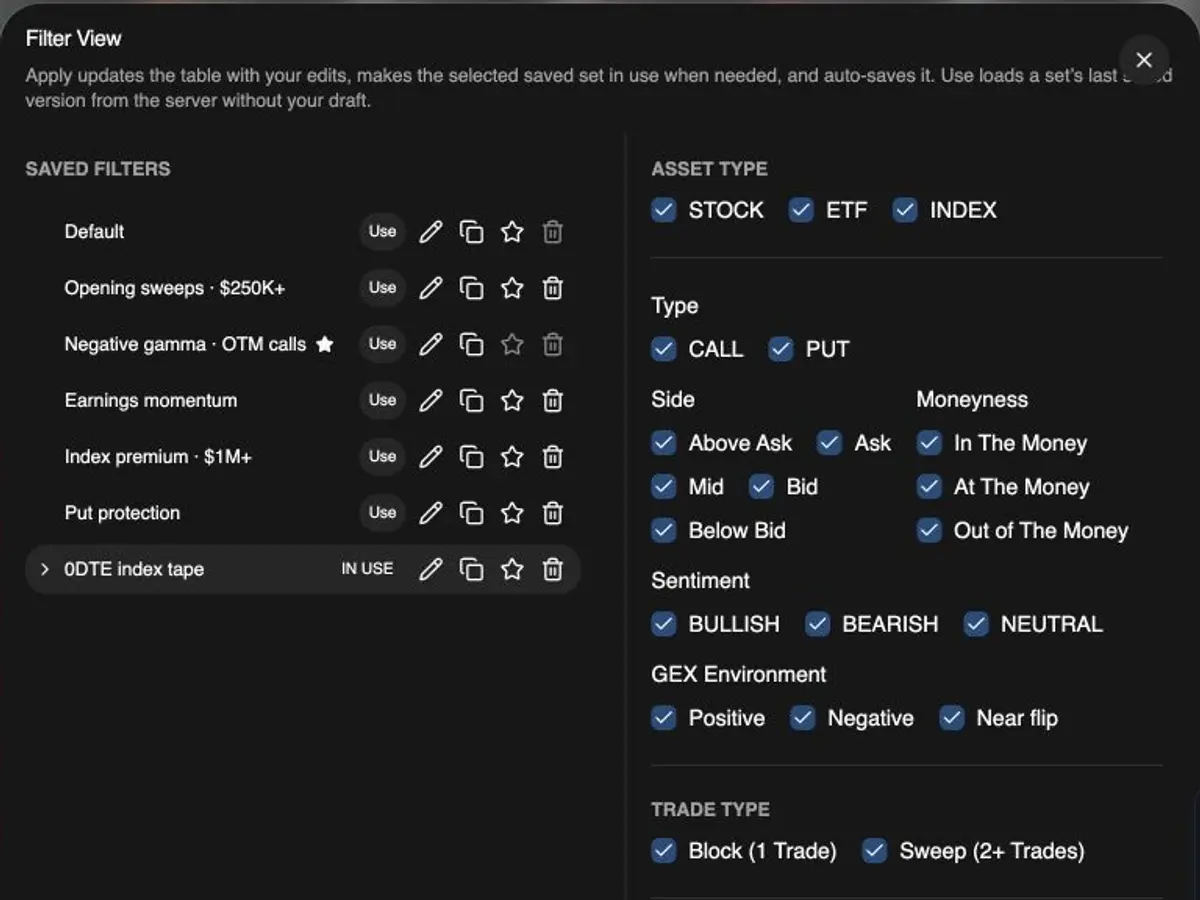
Filters define your UOA recipe. Publish the recipe with any claim so others can reproduce it.
Read the live and historical tape
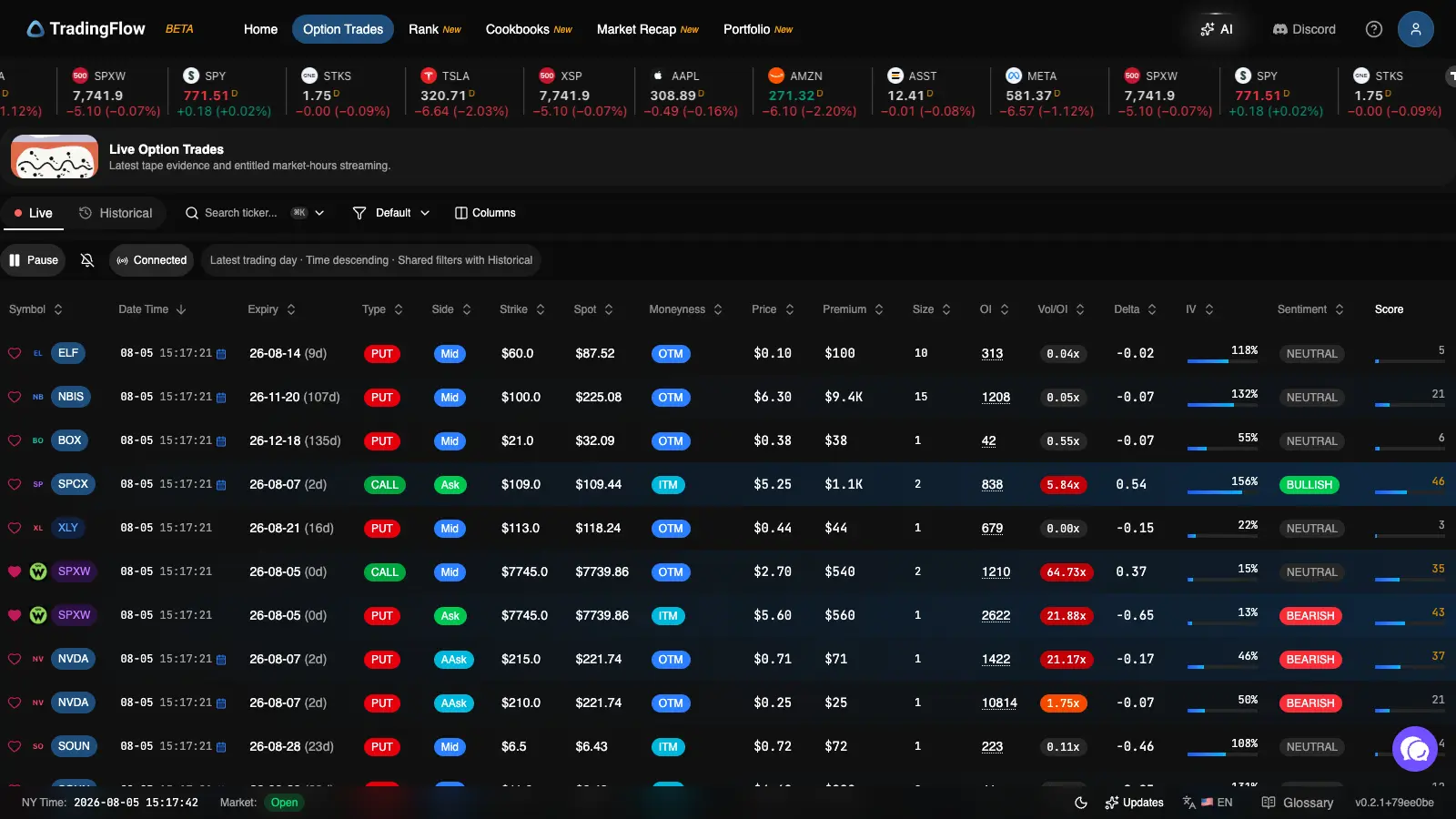
Live tape (session capture). High Vol/OI rows jump out—but still need time, strike, and OI context.
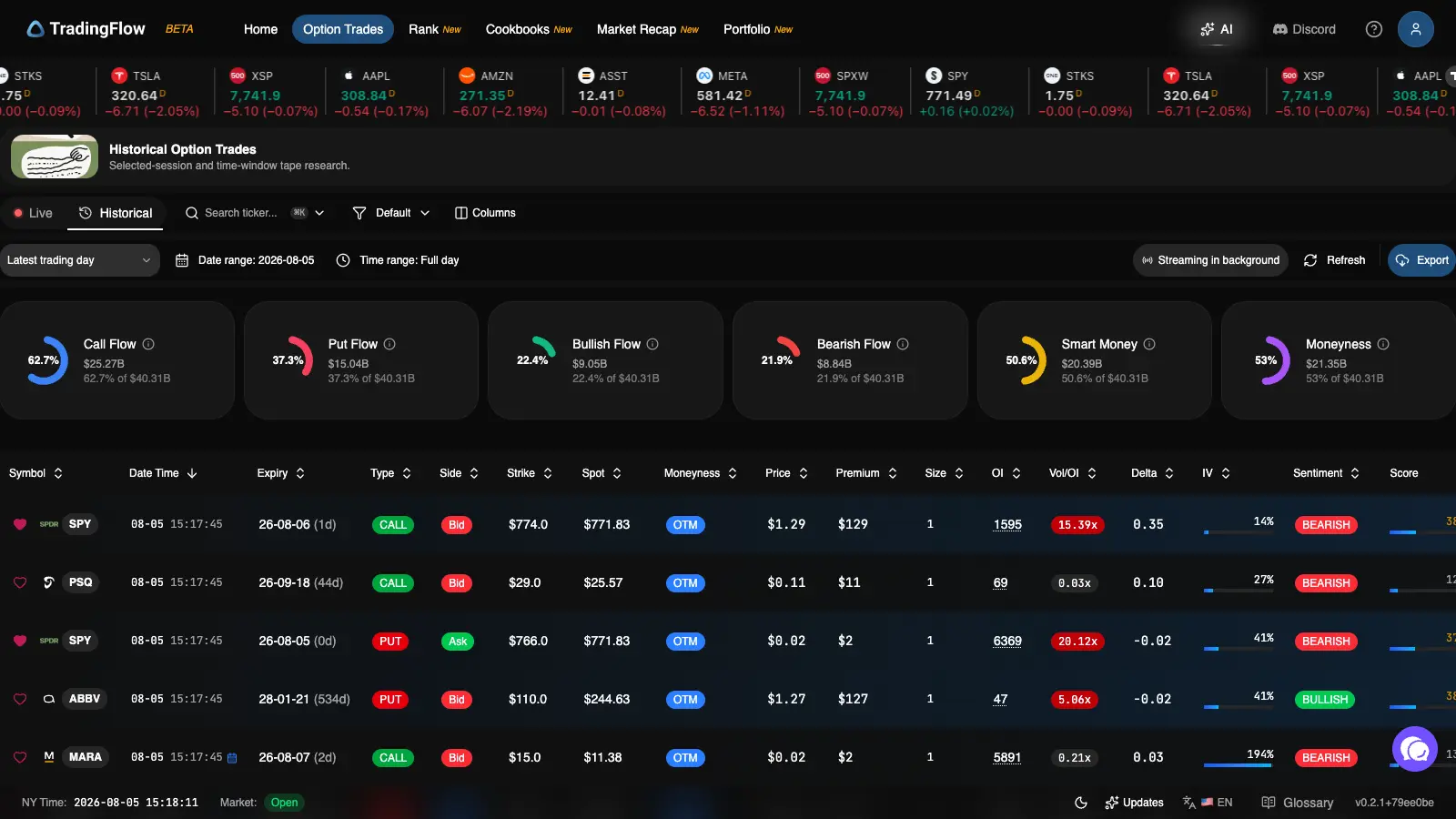
Historical mode locks a date and window. Essential for validating a social post that cites a specific day.
Public recipe: Historical Option Trades → sign in → set date (New York) → symbol → type → strike range → optional Opening Position.
Opening Position is a heuristic
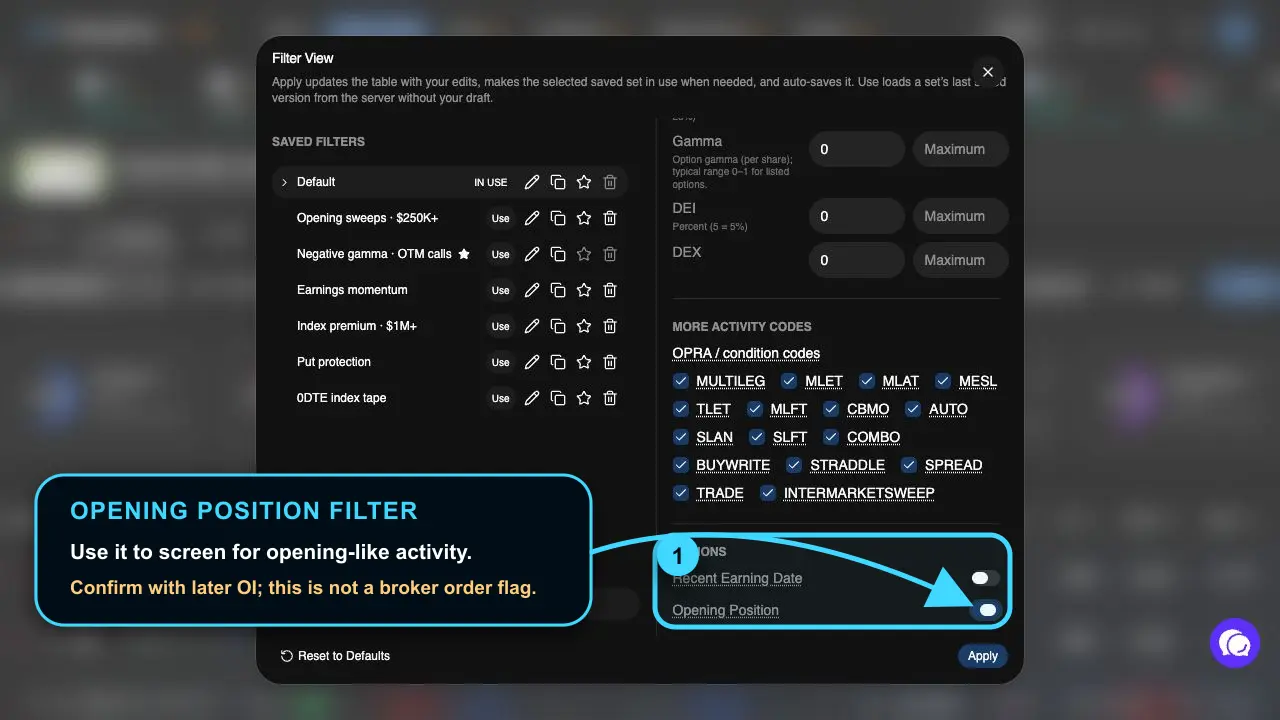
Opening Position is a screening aid, not a broker-supplied open/close flag. Prefer wording like “opening-like / OI-supported,” not “sold to open.”
Rank before you obsess on one print
Rank Contracts and Rank Symbols show which names dominate the session so one viral print is not mistaken for the whole market.
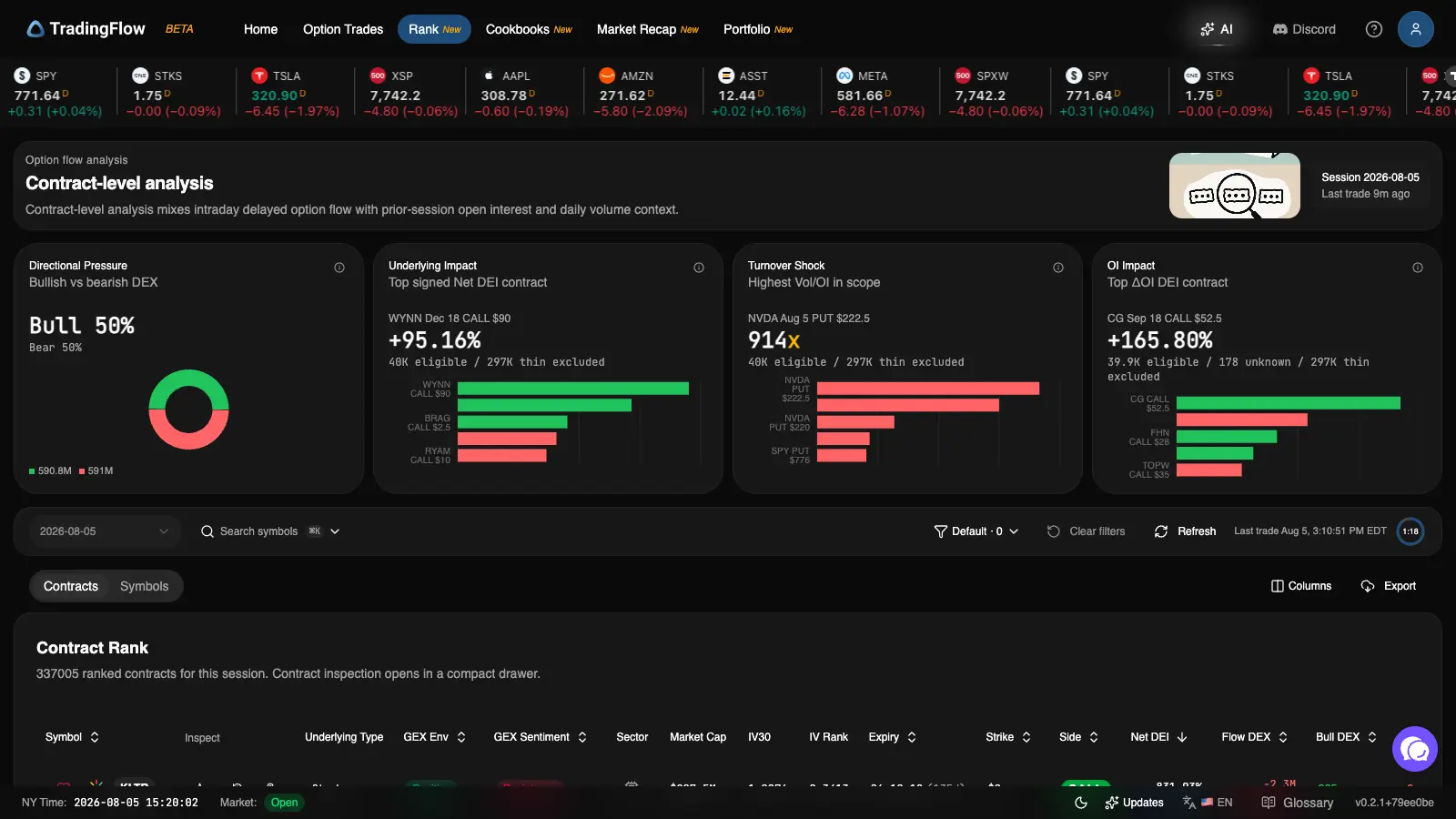
Rank answers “what matters this session?” Tape answers “what exactly printed?”
Evidence boundaries (use this table in recaps)
| Proven by public tape | Not proven |
|---|---|
| Contract, time, price, size, premium | Trader identity |
| Side relative to bid/ask | Single-leg intent |
| Vol/OI at print time | That the trade was opening |
| Later OI increase (when available) | Which account created OI |
For a full worked example, see We verified the viral $7M memory put.
For single-name lottery packaging of the same audit, see Single-name lottery options: verify the print.
Related posts in this series
Learn more
- Unusual options activity · Vol/OI
- Block trades · Options sweeps
- Best UOA scanners
- Option Trades tutorial
- Options and flow concepts
- Option flow glossary
- Product: Option Trades
Open the app
TradingFlow App Home → Option Trades → Rank. Educational only; options can lose money.
Related Articles
$3.2 Billion in One Name Wasn't a Bullish Bet: How I Read Daily Option Flow on TradingFlow
TradingFlow's Daily Option Flow scanner showed $20B in single-name option premium on Aug 14 — and 16% of it landed in one name, SNDK. The size looked bullish. The biggest individual tickets said something messier. Here's how I actually read a session's tape.
Before Anyone's Talking About It: How I Read OI Accumulation on TradingFlow
Every morning before I look at anything else, I open TradingFlow's Pre-Move Positioning screen. Here's a real session — three PCG call strikes building open interest at once — and exactly how far that pattern gets you, and where it stops.
Max Pain Is Not a Pin Forecast: Walls, GEX, and the Tape
Max pain theory is a popular expiration narrative. TradingFlow maps OI walls and GEX next to same-session flow so you do not trade a single pin number blind.