Selling Premium with Flow Context (What TradingFlow Can and Cannot Show)
Theta and wheel discussions dominate Reddit. TradingFlow is not a theta desk—but historical flow, OI, IV context, and GEX risk maps still help sellers avoid blind short-gamma spots.
Reddit’s thetagang and wheel threads ask a fair question: where can I sell premium without walking into a gamma buzzsaw? Premium sellers still need open interest and IV context. TradingFlow’s honest product fit is partial. We are strongest at rank → tape → structure evidence, not multi-DTE portfolio management for systematic sellers.
Still, sellers can use the same evidence stack to avoid pure blind spots.
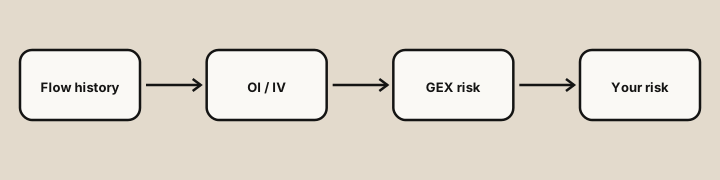
Selling premium still needs risk rules you own. TradingFlow supplies context layers, not a wheel autopilot.
What helps a premium seller
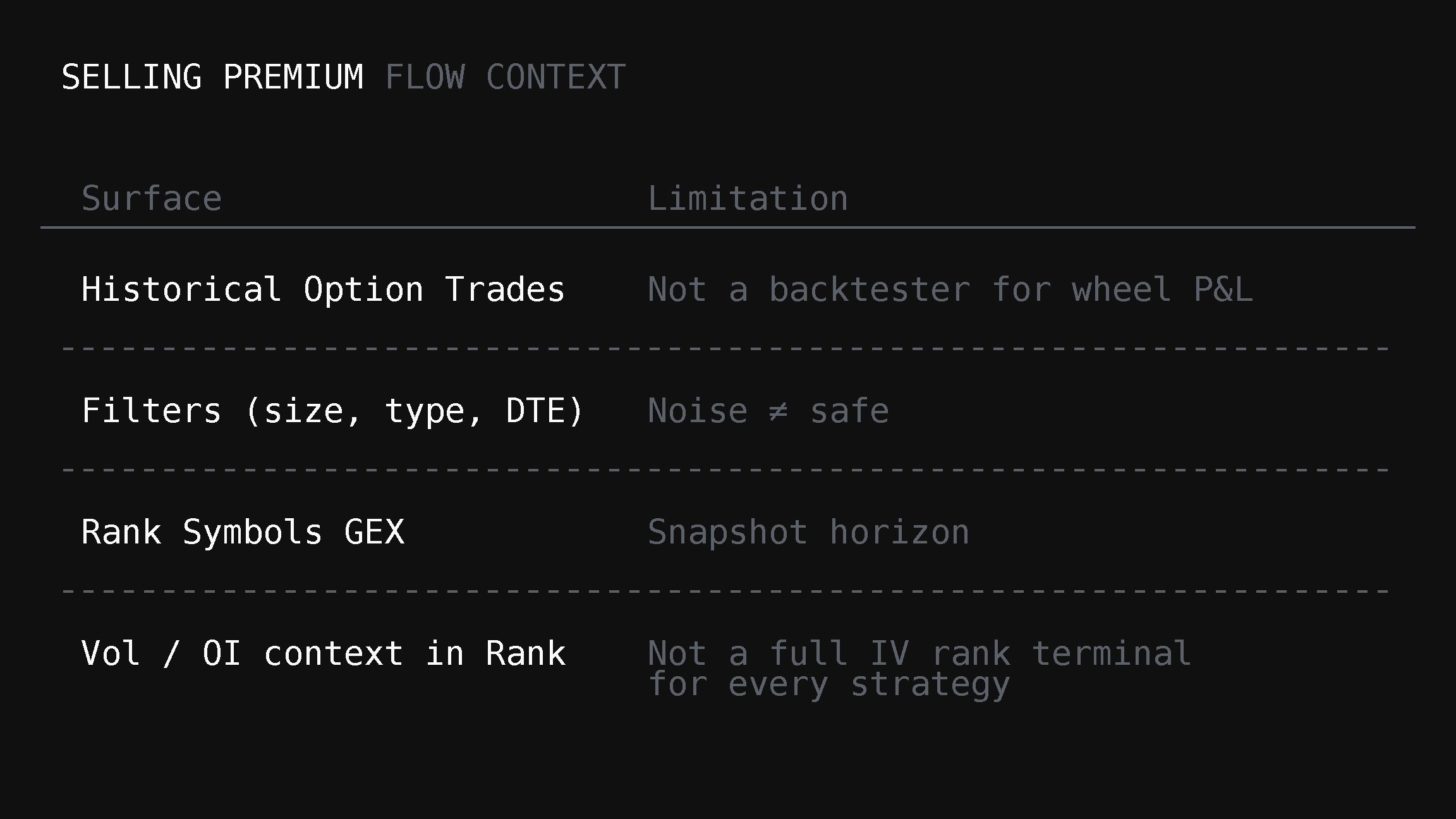
| Surface | Seller question | Limitation |
|---|---|---|
| Historical Option Trades | Where did aggressive premium print recently? | Not a backtester for wheel P&L |
| Filters (size, type, DTE) | Is the short strike quiet or noisy? | Noise ≠ safe |
| Rank Symbols GEX | Is the underlier in a fragile gamma regime? | Snapshot horizon |
| Vol / OI context in Rank | Is IV elevated vs recent positioning? | Not a full IV rank terminal for every strategy |
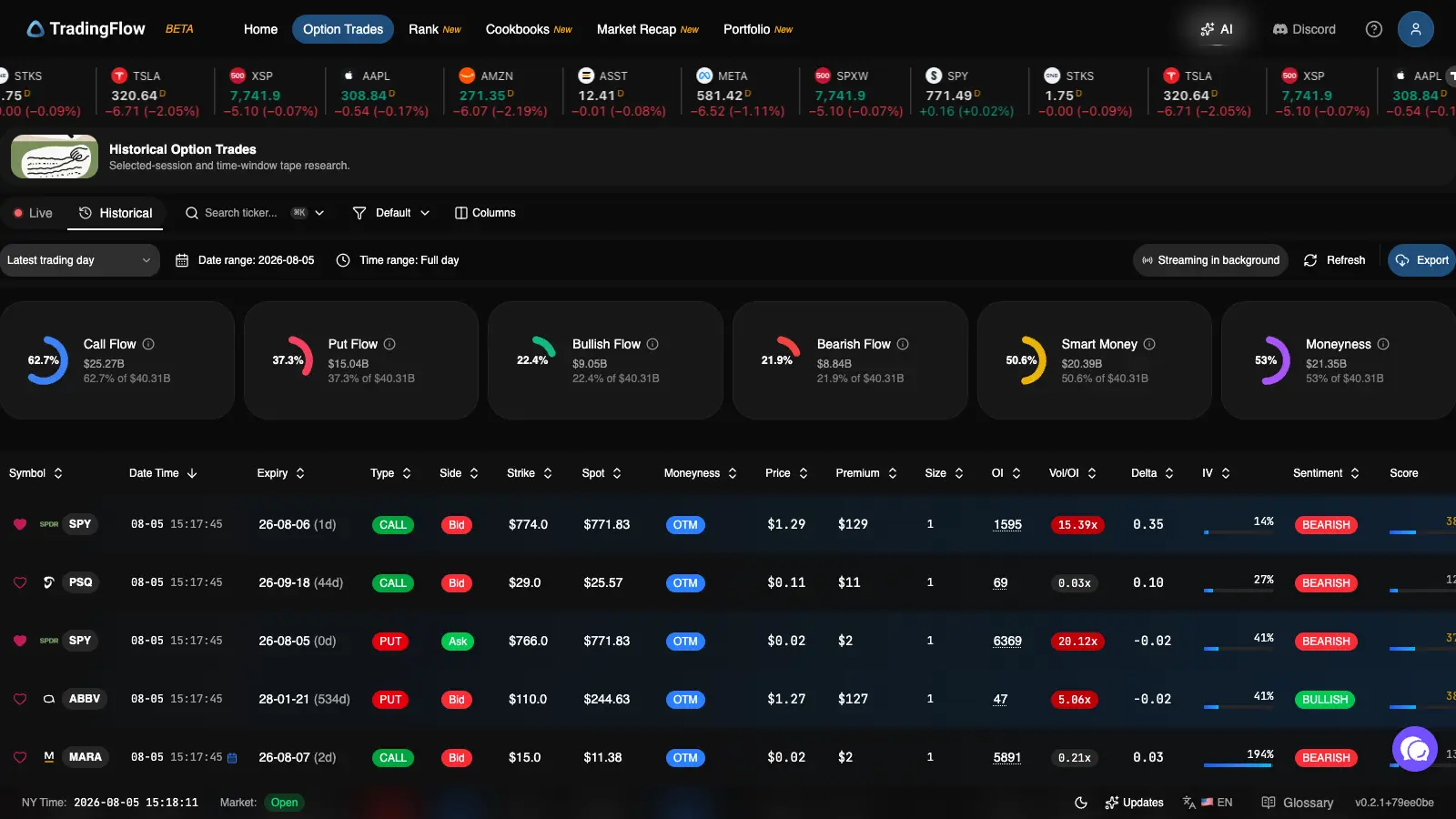
Use historical tape to see where premium actually traded—not where a blog said it should.
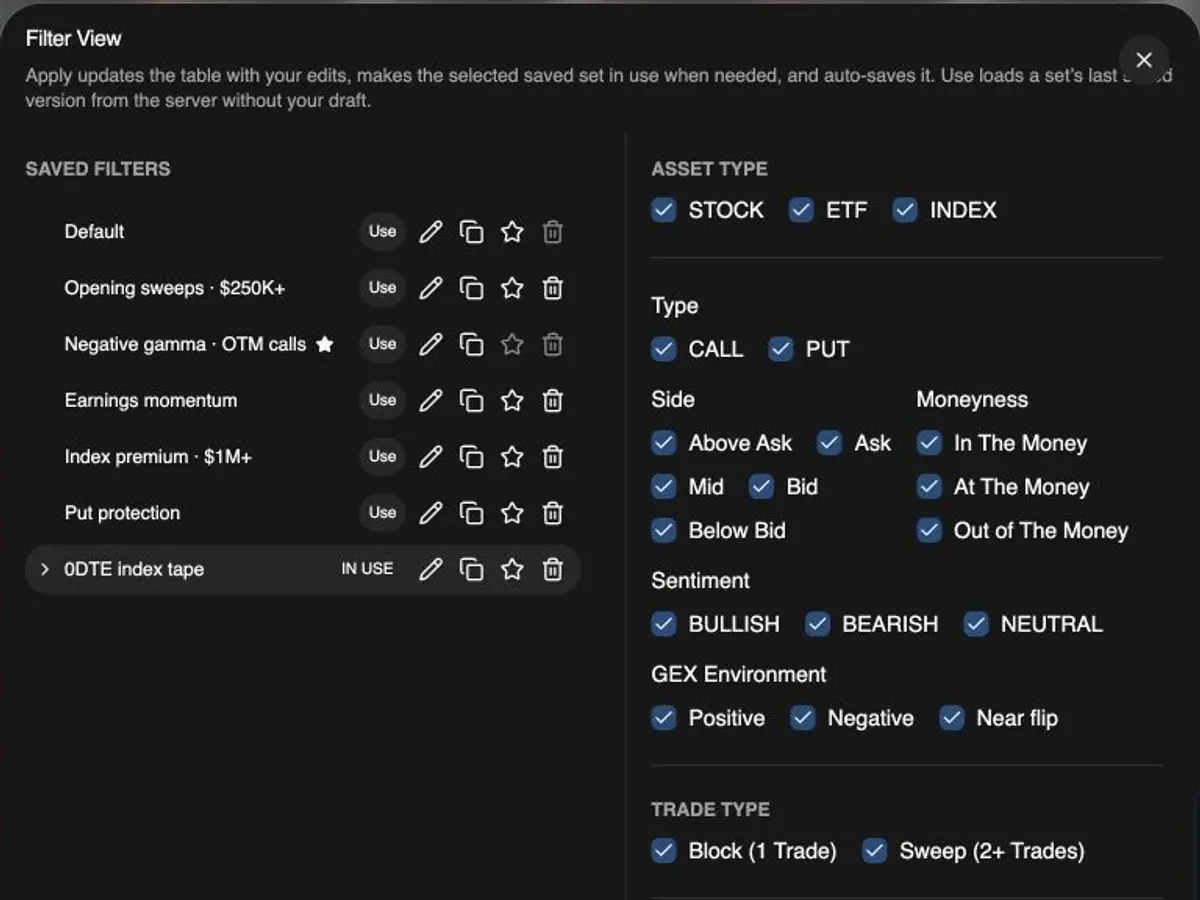
Filters help isolate put sales, call sales, or large prints. They do not size your position.
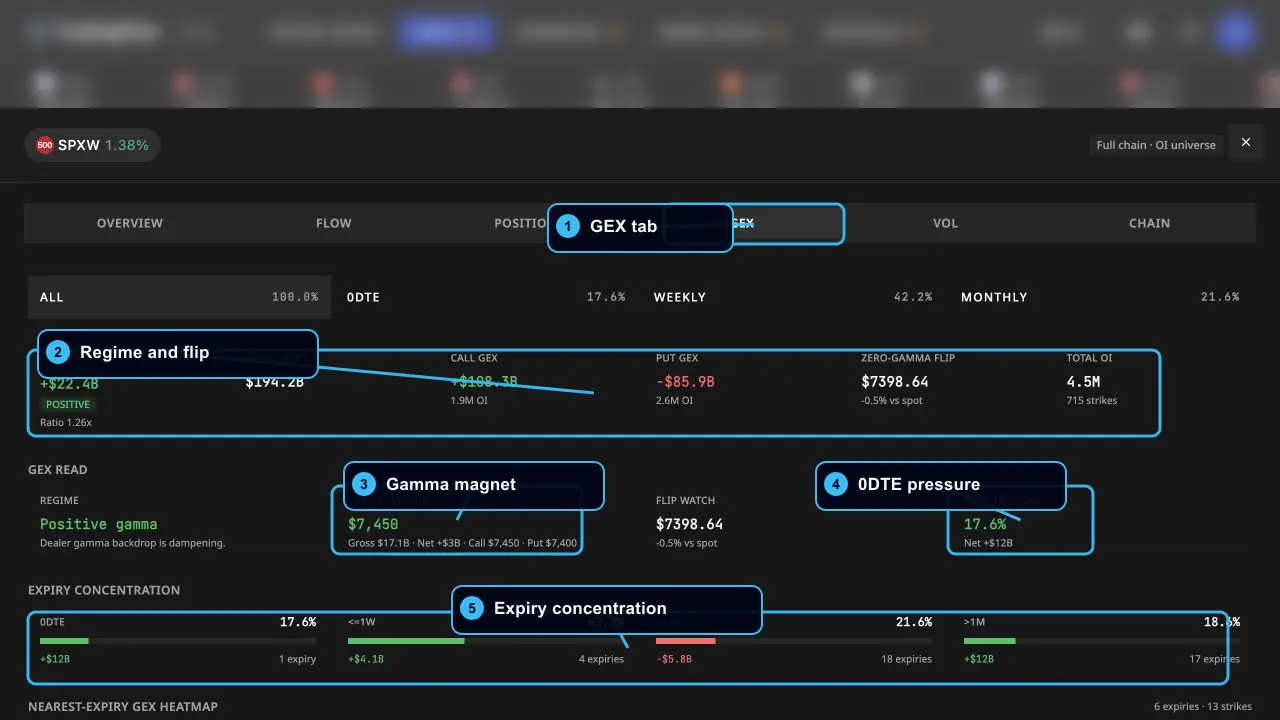
Before selling near a wall or in a negative GEX backdrop, know the map. Structure still is not a “safe to sell” badge.
What TradingFlow is not (yet) for theta
- Dedicated wheel / CSP / covered-call portfolio tracker
- Assignment and early-exercise desk
- First-class multi-leg margin scenario engine
- “Best strike to sell” signal product
If your primary workflow is systematic premium selling, use TradingFlow as a flow and structure cross-check, not the whole desk.
Iron condors meet walls (structure first)
Reddit threads often place 0DTE iron condors relative to a call wall or put wall. That is a structure-aware selling habit—not a TradingFlow signal. A defensible version looks like:
- Map walls and regime in Rank Symbols GEX for the underlier and expiry scope.
- Check whether same-session flow at those strikes is aligned, against, or missing (GEX Flow Evidence).
- Confirm recent tape around the short strikes in Option Trades.
- Size and manage the condor with your rules (delta exits, defined risk, no averaging).
If the map is negative-gamma and thin, social “easy IC” posts are the ones to distrust first.
Defensible seller checklist
- Historical tape around your candidate strike and expiry
- OI and Vol/OI so you are not short into a one-way stampede without knowing it
- GEX / walls on the underlier for session fragility
- Your own max loss and roll rules
Open Historical Option Trades · Rank Symbols
Related posts in this series
Learn more
- Options for sellers
- Gamma exposure · IV Rank · Open interest
- Option Trades tutorial · Product: Option Trades
- Option chain and OI
- Greeks and GEX
- UOA validation
Open the app
TradingFlow App Home. Educational only; short options can lose more than the premium received.
Related Articles
Max Pain Is Not a Pin Forecast: Walls, GEX, and the Tape
Max pain theory is a popular expiration narrative. TradingFlow maps OI walls and GEX next to same-session flow so you do not trade a single pin number blind.
The Last Tape Said OTM. The Official Close Exercised the QQQ $731 Calls.
On August 14, 2026, QQQ’s last option-tape print sat at $730.24—below the $731 strike. The official close was $732.10. OCC auto-exercise follows the close, not the last tick.
Before Anyone's Talking About It: How I Read OI Accumulation on TradingFlow
Every morning before I look at anything else, I open TradingFlow's Pre-Move Positioning screen. Here's a real session — three PCG call strikes building open interest at once — and exactly how far that pattern gets you, and where it stops.