
The Last Tape Said OTM. The Official Close Exercised the QQQ $731 Calls.
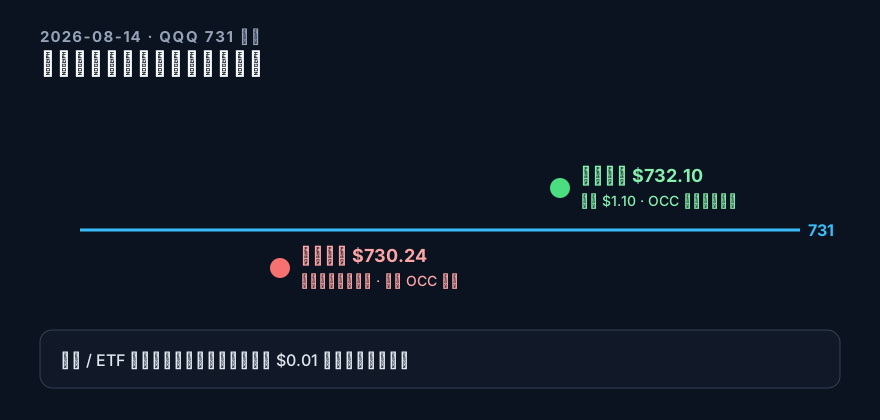
On August 14, 2026, QQQ’s last option-tape print sat at $730.24—below the $731 strike. The official close was $732.10. OCC auto-exercise follows the close, not the last tick.
A long 0DTE QQQ call that is still open at Friday’s bell can become stock over the weekend.
Work the numbers for 11 QQQ $731 calls that expire August 14, 2026:
- 11 × 100 = 1,100 shares
- 1,100 × $731 = $804,100 of stock
- A 1% Monday gap on that book is about $8,041
That is ordinary OCC auto-exercise math, not a prediction. The interesting evidence question is whether those calls finished in the money at all.
On TradingFlow’s August 14 tape, the last option-print spot is $730.24—out of the money versus $731. The official QQQ close is $732.10—in the money by $1.10. OCC auto-exercises long equity and ETF calls that expire ITM by $0.01 or more versus the official close, not versus the last tape print.
Verdict: auto-exercise of a long Aug 14 $731 call is consistent with the official close. The last tape print alone would have led you the other way.
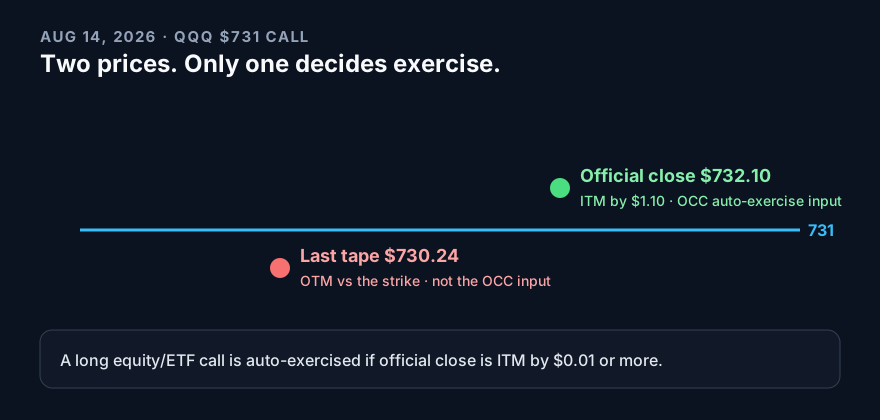
OCC reads the official cash close. The last option-tape underlying print is useful context and is not the exercise input.
Recreate the tape
Open Historical Option Trades, sign in if asked, and apply:
- Mode: Historical
- Symbol: QQQ
- Date range: 2026-08-14
- Time range: Full day
- Type: CALL
- Days to expiry: 0 to 0
- Strike: 731 to 731
Delayed data and a paid entitlement can apply. The date picker only offers sessions the tape can load.
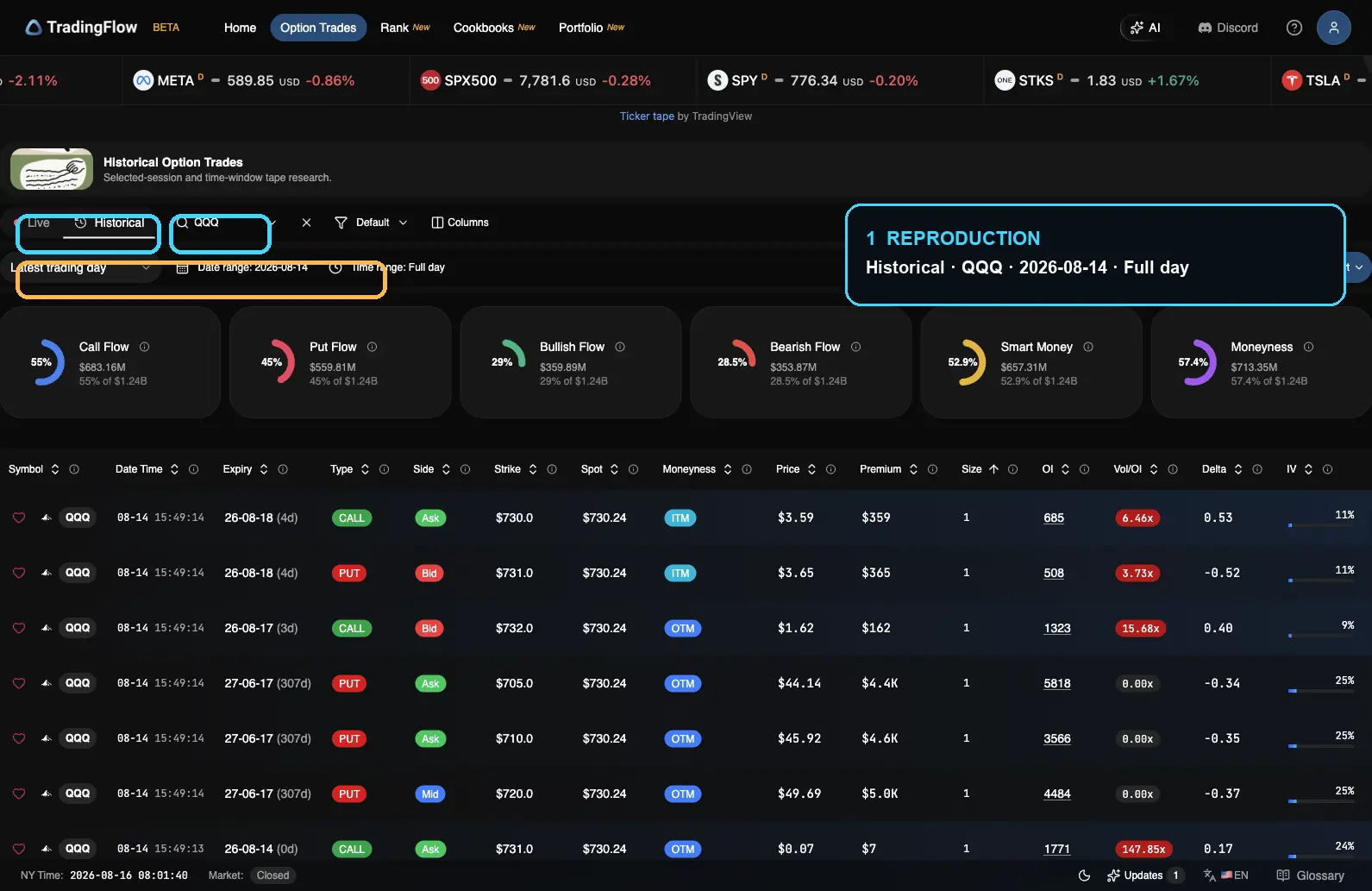
Authenticated test-environment capture of Historical Option Trades after QQQ and the August 14 session were selected. The annotations mark the reproduction controls. This view does not by itself isolate the $731 0DTE call.
Near the 15:49 New York prints, QQQ spot is $730.24. Neighboring 0DTE calls on that last-tape print sit:
| 0DTE strike | Last tape spot | Last option price | Tape moneyness |
|---|---|---|---|
| 729 | $730.24 | $1.26 | ITM |
| 730 | $730.24 | $0.45 | ITM |
| 731 | $730.24 | $0.07 | OTM |
| 732 | $730.22 | $0.01 | OTM |
The 731 call’s last tape price is a few cents. Its last-tape moneyness is OTM. That is real. It is also incomplete.
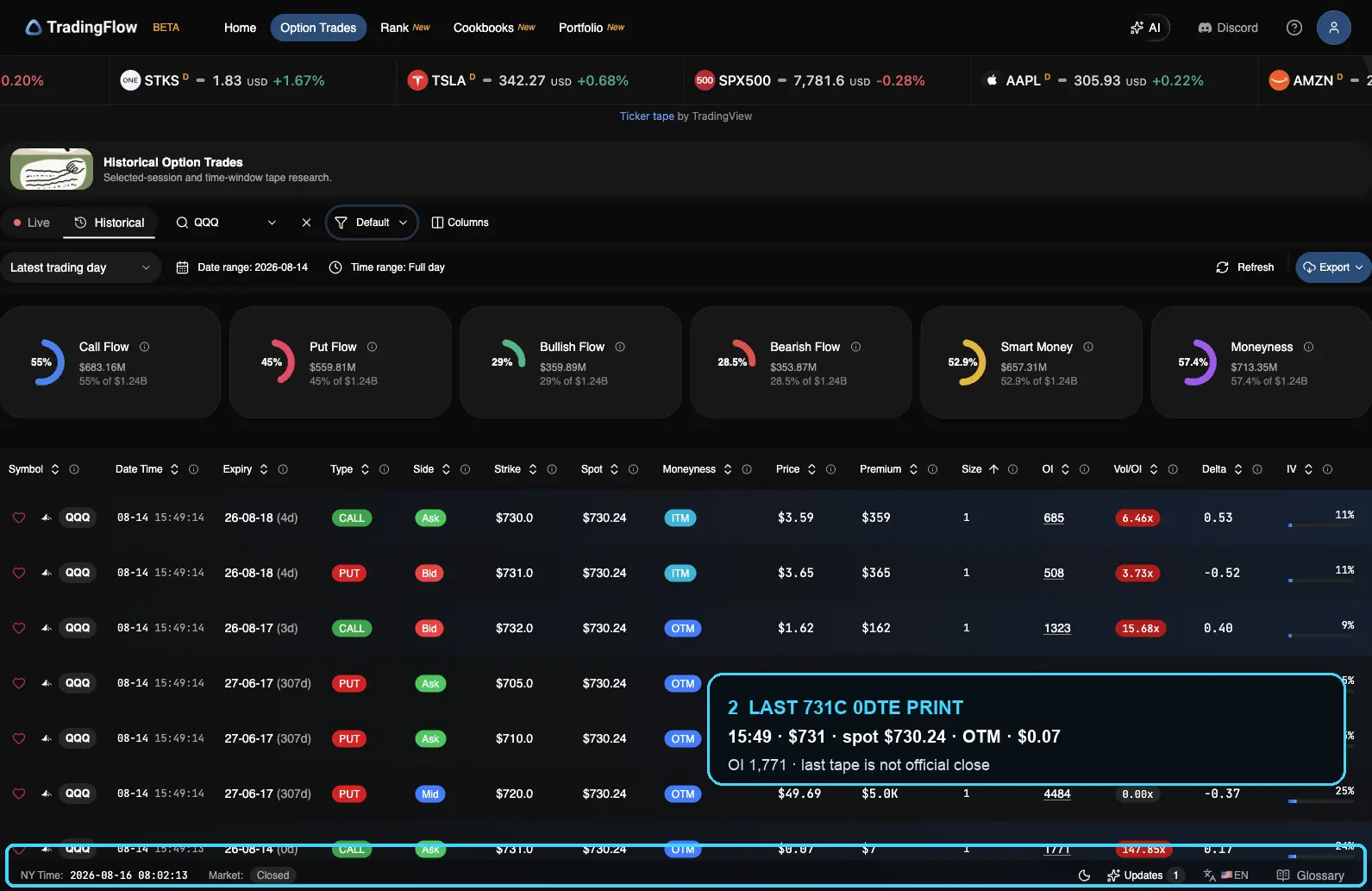
Same-session QQQ tape near 15:49 New York. Spot $730.24 is the last option-print underlying, not the official close. Side labels are quote location, not account identity.
If you want the same audit on another expiry day, stay in Historical Option Trades and change only the date, expiry, and strike. Then open TradingFlow App Home to keep Rank, tape, and cookbooks in one workspace.
Official close is the exercise input
Rank Symbols locked to 2026-08-14 and QQQ shows the same session clock as the tape: last trade 3:49:14 PM ET.
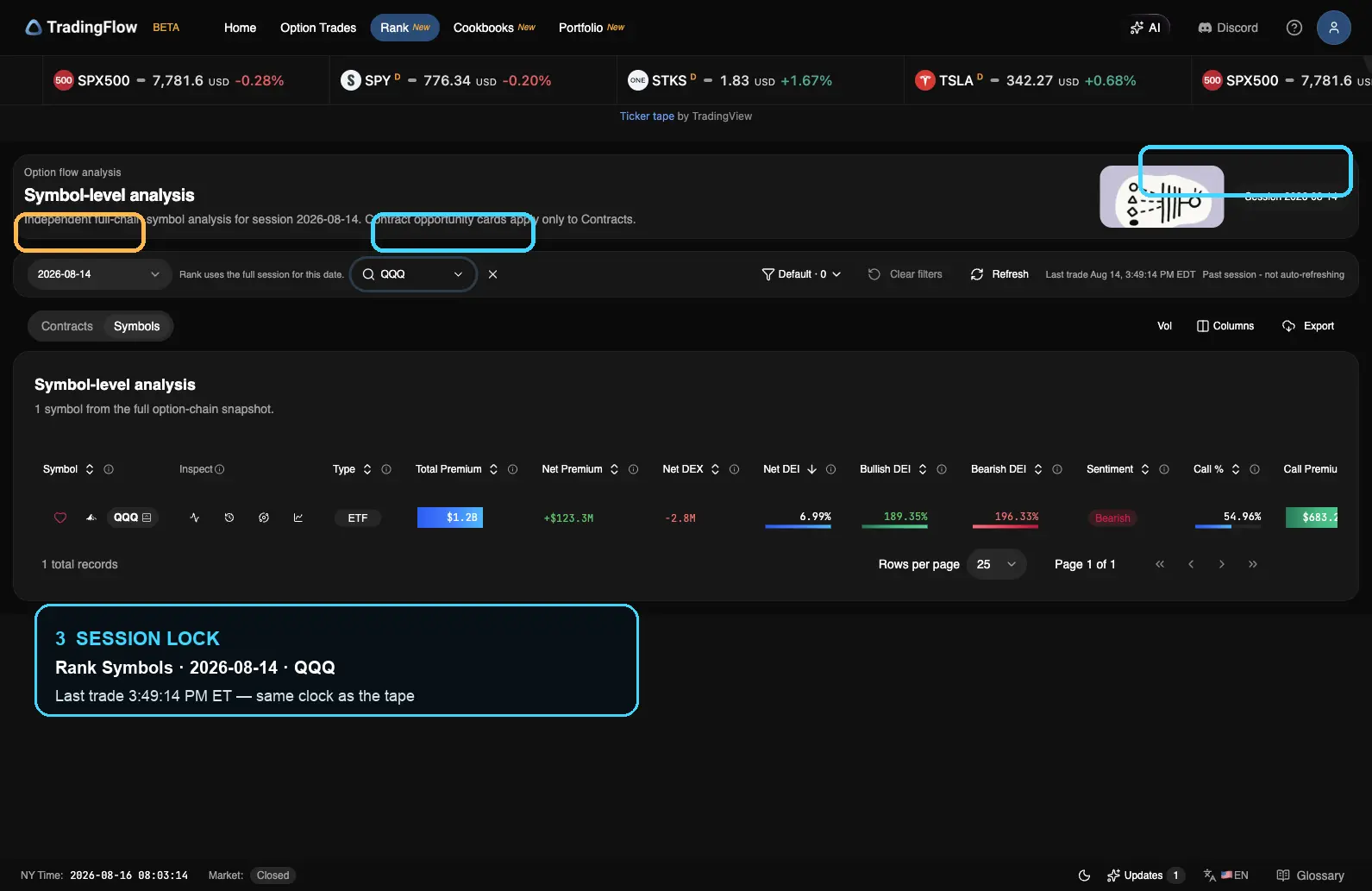
Authenticated test-environment capture of Rank Symbols. Session date and QQQ filter match the tape. The visible Spot/last-trade clock is 3:49 PM ET—the same last-print window as Historical Option Trades. Official close ($732.10) comes from that session’s symbol metadata, not from the last option-print spot.
Symbol metadata for QQQ on 2026-08-14:
| Field | Value |
|---|---|
| Open | $725.10 |
| High | $734.00 |
| Low | $724.00 |
| Official close | $732.10 |
| Change | +1.2% |
| Last tape spot | $730.24 |
| Close − $731 | +$1.10 |
| Close moneyness | ITM |
| Intrinsic at close | $1.10 |
The closing auction can move an index ETF more than a dollar after the last option print you still see on the tape. That is why a 731 call can look dead at 15:49 and still be exercised after the official print.
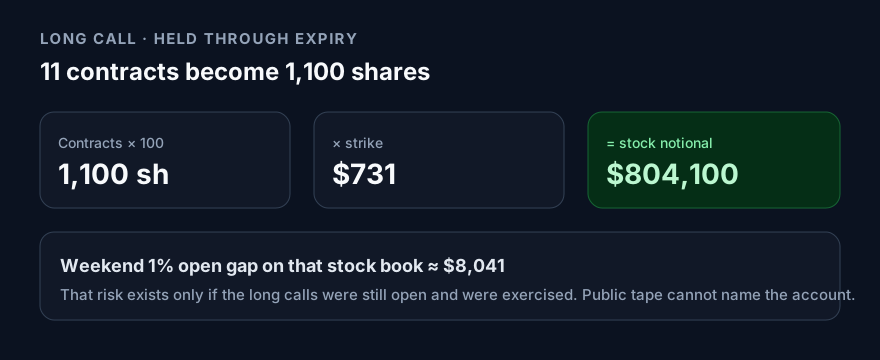
If 11 longs are still open and OCC exercises them, the account buys 1,100 QQQ at $731. Weekend gap risk is then a stock problem. Public tape cannot prove those 11 were held in one account.
This is also pin risk adjacent: a strike that finishes near spot can force exercise, assignment, and hedge noise even when the last tick looked harmless.
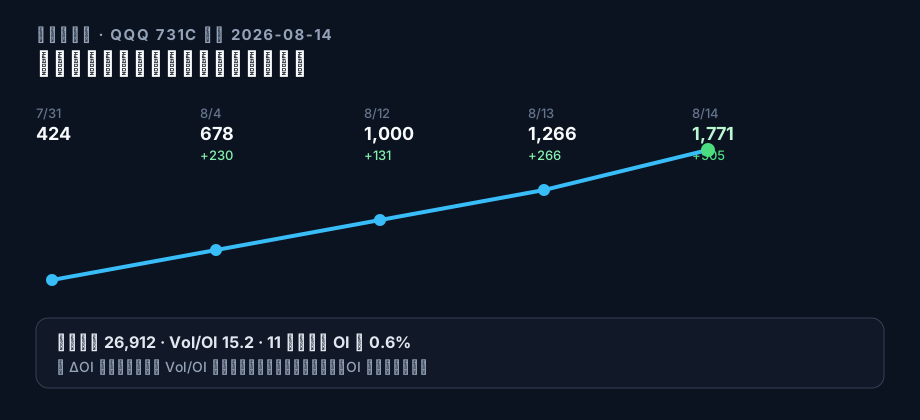
Open interest: the strike was still being added to
Open interest answers a different question than the close. ΔOI tests whether the strike added or unwound positions into expiry. It does not decide exercise, and it does not name a trader.
From the August 14 option-chain snapshot for QQQ 731C expiring that day:
| Thursday OI (implied) | 1,266 |
| Friday expiry OI | 1,771 |
| Friday ΔOI | +505 |
| Friday volume | 26,912 |
| Vol/OI | 15.20 |
| 11 / expiry OI | 0.6% |
+505 means net new open interest into Friday, not a close-down. Vol/OI 15.2 means most Friday prints did not stay open. A forgotten 11-lot, if it existed, lives in the 1,771 book—not in the 26,912 tape.
The 15-session chain ledger:
| Date | OI | ΔOI | Volume | Vol/OI |
|---|---|---|---|---|
| Jul 31 | 424 | −1 | 62 | 0.15 |
| Aug 4 | 678 | +230 | 327 | 0.48 |
| Aug 12 | 1,000 | +131 | 2,739 | 2.74 |
| Aug 13 | 1,266 | +266 | 26,912 | 21.26 |
| Aug 14 | 1,771 | +505 | 26,912 | 15.20 |
OI rose from about 424 to 1,771. The two largest adds are August 4 (+230) and expiry Friday (+505). This is a held-and-added strike, not a one-print wonder.
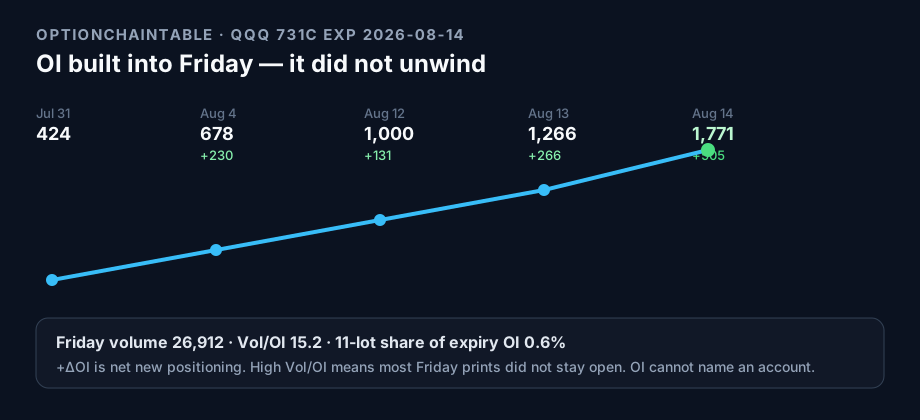
Chain OI is an overnight book. Tape oi on a historical print is the latest known value for that contract, not OI at the print’s timestamp. After expiry the series has no next-session OI print.
August 13 and August 14 share the same chain daily_volume (26,912) and option close ($3.34). Treat those two volume/close cells as possibly stale versus the last tape print of $0.07. Trust the OI / ΔOI path.
What the public data can and cannot say
| Question | Evidence | Defensible language |
|---|---|---|
| Did the 731C finish ITM? | Official close $732.10 | Yes, by $1.10 |
| Would OCC auto-exercise a long? | ITM by more than $0.01 | Consistent with the rule |
| Did the last tape look OTM? | Last spot $730.24, last price $0.07 | Yes |
| Was the strike unwinding? | ΔOI +505, OI 1,771 | No — net adding |
| Were most Friday prints carried? | Vol/OI 15.2 | No |
| Who held the 11? | Anonymous tape and aggregate OI | Unknown |
| Were they opened Friday? | 11 is 2.2% of +505 and 0.6% of OI | Unprovable |
Option flow is anonymous. Bid / ask / mid is quote location. Opening-position filters are heuristics, not broker instructions.
Related reading
- SPY / SPX / QQQ 0DTE evidence loop
- Call walls, put walls, pin days
- Max pain is not a pin forecast
- Pre-move positioning and OI accumulation
Learn more
- Moneyness · Open interest · Vol/OI
- Pin risk · Zero DTE · Option flow
- Option trades tutorial · Option chain and OI
Open the app
TradingFlow App Home → Historical Option Trades for the expiry-day tape → Rank Symbols for the official close → chain OI for create-versus-unwind.
Educational market-structure research only—not investment advice. Options involve substantial risk of loss.
Related Articles
Max Pain Is Not a Pin Forecast: Walls, GEX, and the Tape
Max pain theory is a popular expiration narrative. TradingFlow maps OI walls and GEX next to same-session flow so you do not trade a single pin number blind.
Single-Name Lottery Options: Verify the Print Before the Story
OTM single-name packages go viral as lottery tickets. TradingFlow’s process is claim → exact filters → tape match → OI limits—before any narrative about intent.
SPY / SPX / QQQ 0DTE: Read the Tape Before the Pin Story
Same-day index options dominate trader chat. TradingFlow’s evidence loop is Rank → Option Trades tape → GEX/walls structure—not a 0DTE signal feed.