Official template · basic · Key levels
See call and put open interest by strike.
Answer "where is open interest stacked in this name" without a gamma model in the way.
The report UI is recreated from the test app's Sep 25, 2026 session, not a live screen. A historical example with music; no narration.
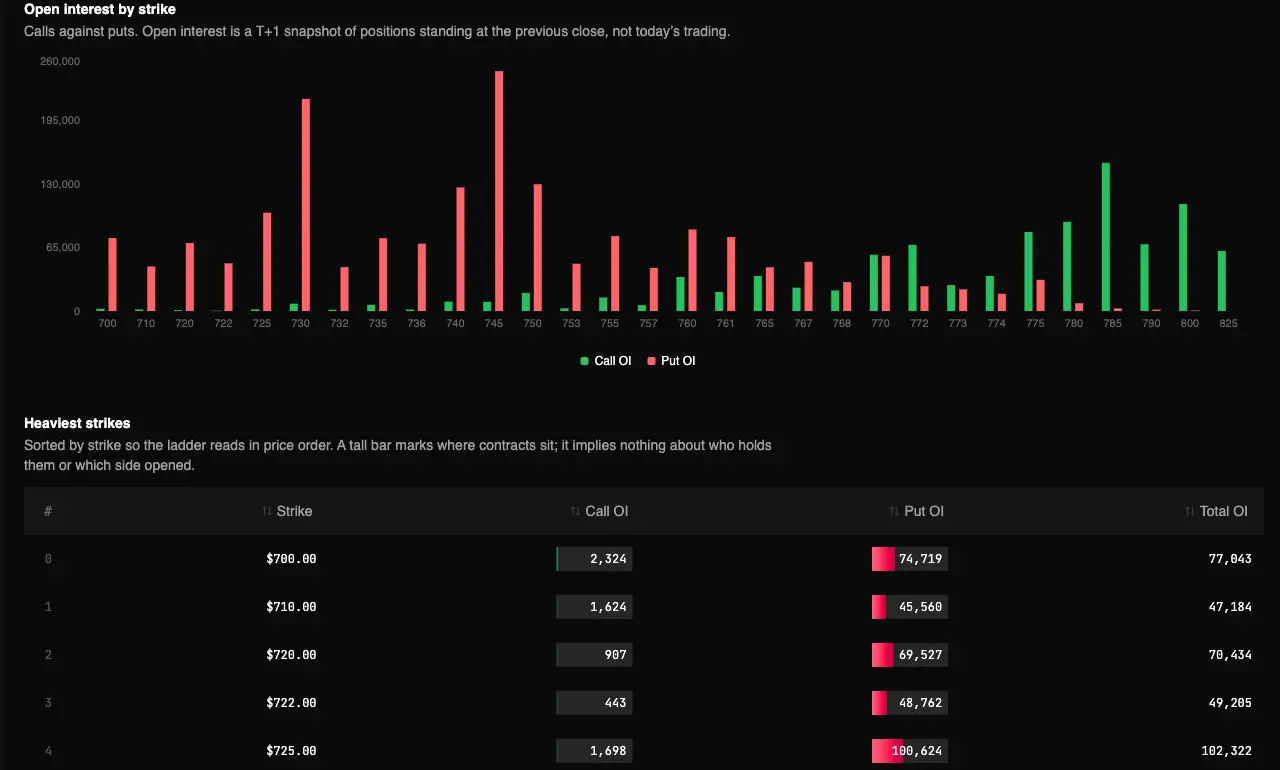
Captured Sep 23, 2026 on testapp.tradingflow.com. This is a historical example; results on this page do not refresh. Swipe across the image to inspect its columns.
- 01Symbol + Max DTE
- 02Group OI by strike
- 03Call / put ladder
Prior-close OI, without gamma weighting.
Read the output
- 01Call and put open interest per strike within ±10% of spot.
- 02The heaviest strikes by total open interest, read in price order.
- 03A tunable expiry window.
Keep in mind
Open interest is a T+1 snapshot of positions standing at the previous close, not today’s trading.
Explore the concept behind this report
Open interest is contracts still open. Volume is only today’s trades. OI usually updates after the session; the tape is live.
How to read it
From report to evidence01
Find the heaviest strikes
The ladder shows where contracts sit, in price order rather than by size.
02
Compare calls against puts
A strike heavy on one side reads differently from one heavy on both.
03
Cross-check the weighted view
Gamma Levels weights the same open interest by gamma, and often ranks strikes differently.
Method and limitations
A one-screen Cookbook tool: the raw open-interest ladder around spot, counting contracts rather than weighting them. Official app template: Open Interest Ladder.
What the report computes
- Call and put open interest per strike within ±10% of spot.
- The heaviest strikes by total open interest, read in price order.
- A tunable expiry window.
What it does not claim
- Open interest is a T+1 snapshot of positions standing at the previous close, not today’s trading.
- A tall bar says nothing about who holds the contracts or which side opened them.
- No gamma weighting, so this is not a GEX wall and can point elsewhere.
Selects the heaviest strikes by open interest but displays them in price order, so the ladder reads as a ladder instead of a ranking.
Frequently asked questions
- Does heavy open interest act as support?
- Open interest records how many contracts exist at a strike. It does not establish who holds them, which side opened, or any obligation for price to behave near it.
- Why does this disagree with the gamma walls?
- Because walls weight open interest by gamma and this does not. A far strike with huge open interest can dominate here and barely register there.
Related recipes
- OI ladder · AdvancedSee where open interest actually sits by strike before you treat a GEX wall as the book.
- Gamma levelsAnswer "what are the gamma levels for this ticker" without opening a full structure map.
- Max pain lookupAnswer "where is max pain for this ticker" in one look, without reading a full structure report.
More learning resources
The public page explains the report. Run the official template in TradingFlow for a selected completed market session.
Open OI by strike · Basic